Climate-controlled, weather-protected transport for high-value and specialty vehicles.
Compass TransitWorks provides enclosed auto transport in every U.S. state. Our carrier network is vetted, federally compliant, and dispatched by U.S.-based coordinators who own your shipment from quote to delivery.
Climate-controlled, weather-protected transport for high-value and specialty vehicles. We handle individual owners, snowbirds, collectors, dealers, and corporate fleets with the same level of transparency: one quote, one dispatcher, and one accountable carrier.
Call or submit our form. A dispatcher quotes your route in minutes.
We dispatch a vetted carrier and confirm pickup window in writing.
Live updates from pickup to drop-off with a final condition report.
Real reviews from real customers shipping vehicles across the country with Compass TransitWorks.
"Compass TransitWorks moved my truck from Dallas to Charlotte in 6 days. Dispatcher was sharp, driver was on time, zero damage. Would absolutely use again."
"I was nervous about shipping my classic Camaro. They put it in an enclosed trailer with soft straps and sent photos at pickup and delivery. Total pros."
"Best quote of the four companies I called, and the only one that actually picked up the phone after I booked. Smooth coast-to-coast delivery."
Direct answer: Enclosed auto transport is vehicle shipping inside a fully sealed trailer that protects the vehicle from weather, road debris, sun exposure, and visibility. It is the standard for high-value, classic, exotic, luxury, and low-clearance vehicles.
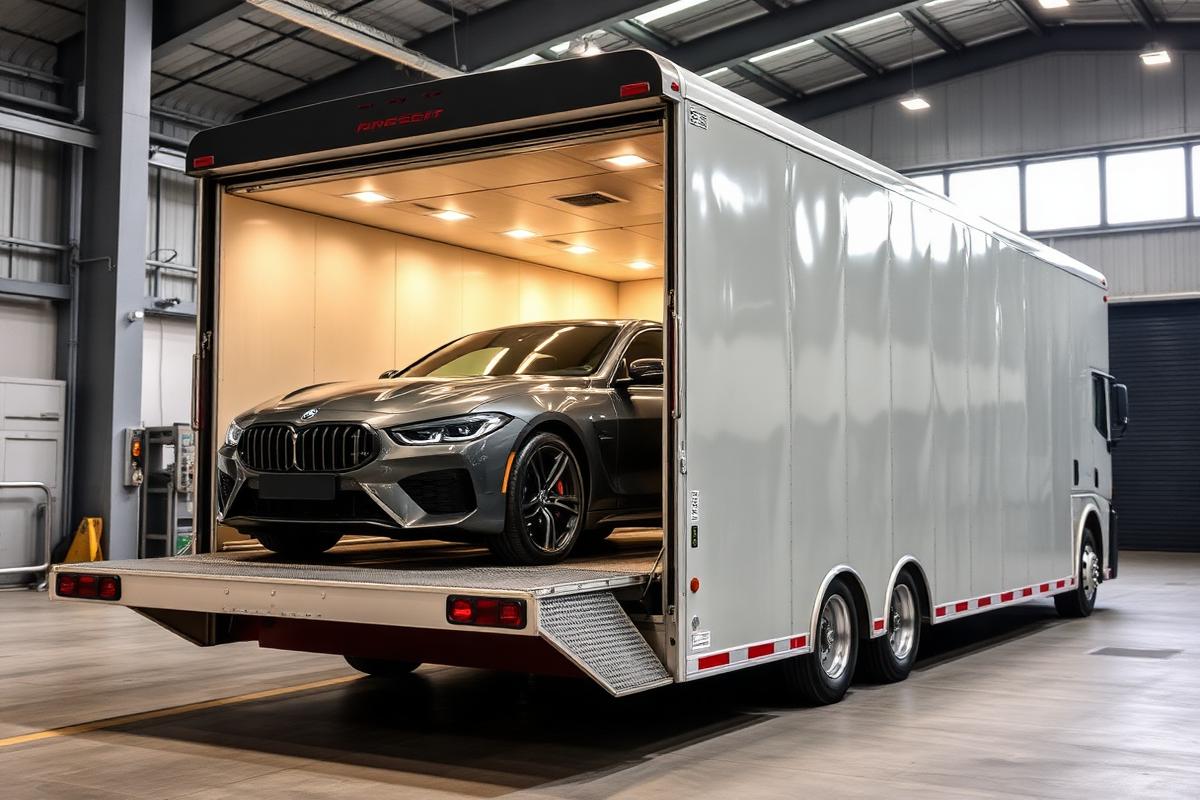
Enclosed carriers come in two configurations: soft-sided (curtain-walled trailers with overhead structure) and hard-sided (fully enclosed box trailers, often with hydraulic liftgates and climate control). Hard-sided enclosed is the gold standard for collector cars, exotics, and any vehicle where preservation of original paint and bodywork is essential.
Enclosed transport runs 40–60% above comparable open transport on the same route.
Enclosed dispatches slightly slower than open because fewer carriers run the equipment.
| Factor | Open | Enclosed |
|---|---|---|
| Weather protection | None | Full |
| Road debris risk | Some | Effectively zero |
| Insurance limit | $100k–$150k | $250k–$1M+ |
| Loading | Ramps standard | Liftgate available |
| Premium | Base | +40% to +60% |
| Best for | Daily drivers | Classics, exotics, luxury, low-clearance |
Short answer: Typically 40–60% above open transport on the same route.
On a 1,500-mile route, an $1,000 open shipment usually quotes $1,400–$1,600 enclosed. The premium reflects fewer cars per trailer, higher insurance limits, and more specialized equipment.
Short answer: For vehicles valued above $75,000, classics, exotics, and low-clearance cars.
Below those thresholds, open transport is industry standard and safe. Above them, enclosed is the right call for value protection and insurance limits.
Short answer: Yes — hard-sided fully enclosed trailers are the gold standard.
Soft-sided trailers protect from most road debris but offer less weather and visibility protection. For show cars and concours-quality restorations, specify hard-sided.
Short answer: 3–7 days standard; 24–48 hours with expedited.
Enclosed capacity is lower than open, so booking 5–7 days ahead is recommended.
Short answer: Yes — climate-controlled enclosed transport is available for the most sensitive vehicles.
Specify at booking; it adds a premium but is essential for some restoration-grade interiors.
Related services: Open Auto Transport · Classic Car Transport · Luxury Vehicle Transport · Door-to-Door Vehicle Shipping
Helpful guides: Open vs enclosed · Classic car shipping guide · Auto transport insurance explained · How much does it cost to ship a car?
Not all enclosed trailers are equal. Hard-sided enclosed trailers are fully sealed metal box trailers (Cottrell, Kentucky, and similar makes are the standard). Soft-sided enclosed trailers use a metal frame with heavy fabric or vinyl walls — protection from weather and most debris, but less protection than hard-sided. For concours-quality restorations, exotics, and show vehicles, always specify hard-sided.
Hydraulic liftgates load vehicles horizontally rather than driving them up a ramp. For any vehicle with under 5" of ground clearance — most modern supercars, lowered classics, and many luxury sedans with sport packages — ramp loading risks splitter, exhaust, or oil-pan damage. Liftgate loading eliminates the risk.
Enclosed carriers typically employ drivers with a decade or more of high-value experience. They handle the loading process themselves (no shop assistants), document panel-level photos at pickup and delivery, and follow strap-only tie-down protocols. Compass TransitWorks vets the driver as part of carrier selection.
Enclosed dispatches weekly in every U.S. metro. Our highest enclosed-volume lanes include Scottsdale (Barrett-Jackson), Naples and Palm Beach (snowbird luxury), Monterey (concours week), Nashville (collector cars), and the Northeast luxury corridor. See our classic car shipping guide for in-depth equipment specifics.
Answers to the questions we get most often about nationwide vehicle shipping.
Enclosed Auto Transport pricing depends on distance, vehicle size, vehicle condition, and time of year. Most nationwide shipments fall between $600 and $1,800. Request a free quote from Compass TransitWorks for an exact, locked-in price.
Regional shipments inside 1,000 miles typically deliver in 2–4 days. Cross-country routes generally complete in 7–10 days. Expedited dispatch is available when timelines are tight.
Yes. Every carrier in the Compass TransitWorks network carries federally required cargo insurance. Higher-limit policies are standard on enclosed and high-value shipments.
Yes. Compass TransitWorks dispatches carriers across every U.S. state, with active dispatch capacity in every U.S. region.
Call (833) 742-9186 or use our contact form for a free, no-obligation quote. A dispatcher confirms pricing and pickup within minutes.
Talk to a live U.S.-based dispatcher. No obligation, no spam.